



Visuality Logo
Co-funded by the EU logo
This project has been funded with support from the European Commission. The author is solely responsible for this publication (communication) and the Commission accepts no responsibility for any use may be made of the information contained therein. In compliance of the new GDPR framework, please note that the Partnership will only process your personal data in the sole interest and purpose of the project and without any prejudice to your rights.

About

Visuality GraphicsVisuality Graphics
Visuality Graphics
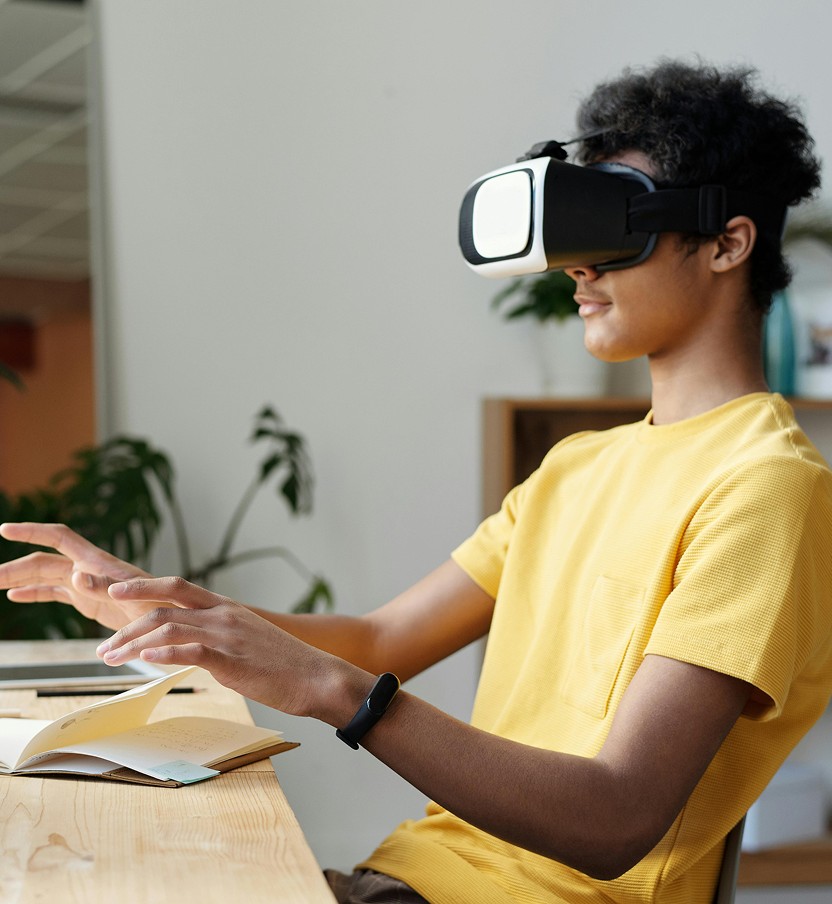
A young person wearing a yellow shirt sits at a desk with a VR headset, gesturing with hands as if interacting with a virtual environment. Relaxed atmosphere.
Close-up of a vibrant human eye, featuring bright blue, green, and orange flecks around the pupil. Eyelashes are visible, adding depth and detail.
About VISUALITY

Why VISUALITY is needed

Across Europe, too many people are still excluded from higher education and lifelong learning because teaching approaches do not match how diverse learners process and retain information. The participation gap is clear: only 10.8% of adults (25–64) take part in education, below the EU target of 15%, and participation among low-skilled adults is even lower (4.3%).

At the same time, literacy barriers remain widespread. The OECD’s 2023 PIAAC findings show that nearly 20% of adults lack basic literacy and numeracy skills, which makes text-heavy learning environments especially difficult to access.

Research also points to a practical opportunity: visuals can support understanding and retention when used with clear pedagogic intent. Visual information can be processed far more efficiently than text, and structured use of visuals is associated with stronger knowledge retention.

Yet many educators still rely on traditional, text-heavy instruction, and visuals are often treated as decoration rather than as core learning tools. This is happening at a time when digitalisation is reshaping attention and learning habits, making it harder for learners to stay engaged through text alone.

VISUALITY addresses this gap by helping educators use visuals as structured teaching strategies, supporting comprehension, engagement, accessibility, and participation for learners facing language, literacy, socio-economic, or cognitive barriers.


A glass prism on a table

More about VISUALITY

VISUALITY is a 30-month European cooperation project (2025–2028) that translates evidence on visual learning into practical teaching improvements across higher education and adult education. It connects research, training, real-world implementation, and scale-up through networks:

1. Research on what works, across countries

The partnership will investigate current visual teaching practices and the barriers educators face, drawing on cross-national insight so the findings and recommendations are transferable across different education systems.

2. A certified online course with micro-credential

VISUALITY will develop a certified course that trains educators in effective visual communication, multimedia learning, and instructional design principles — with a micro-credential to support professional recognition and institutional CPD uptake.

3. Evidence from real teaching contexts

To move beyond theory, VISUALITY will test the approach in practice: 30+ educators will apply the methods in teaching with 200+ students, and the project will publish an empirical report on what changes in teaching practice and learner experience.

4. Scale and long-term uptake

VISUALITY will share results, tools, and training pathways through higher education and adult education networks, with the goal of reaching 250+ institutions and supporting sustained adoption beyond the project lifetime.
Overall, VISUALITY aims to equip 90+ educators with practical visual pedagogy skills and strengthen inclusive teaching practices across Europe through an open, accessible digital hub and structured dissemination.
Visuality GraphicsVisuality Graphics
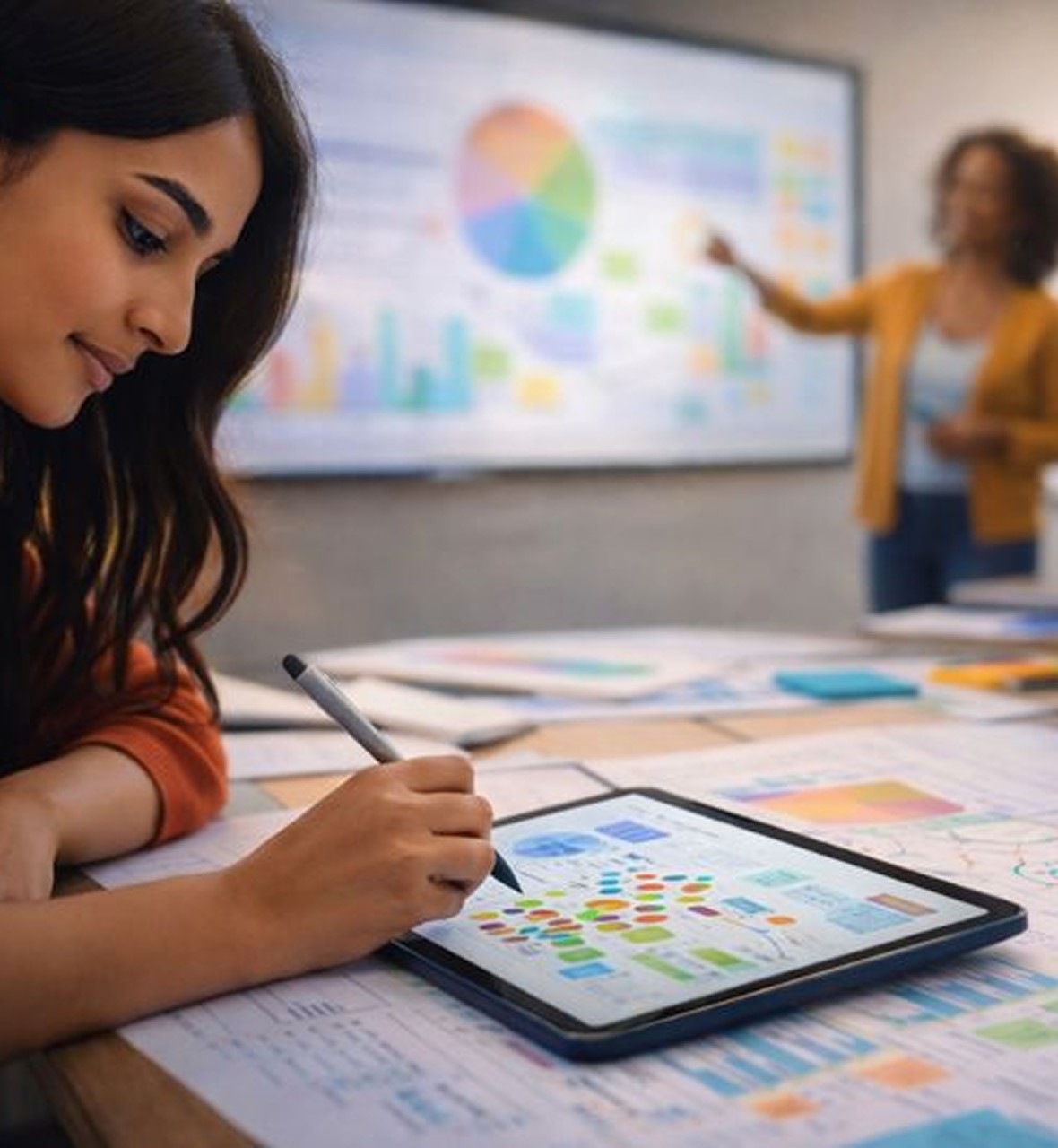
A woman analyzes data on a tablet with colorful charts. In the background, another person gestures at a screen displaying graphs. The mood is focused.

Who can benefit from this project

VISUALITY is for people and organisations who want practical ways to make teaching more inclusive and accessible through the strategic use of visuals.

If you teach in higher education or adult education, VISUALITY will provide practical guidance and training to help you use visuals to support understanding, engagement, and retention, particularly for learners who struggle with text-heavy materials.

If you are a learner who finds traditional learning materials difficult to access due to language barriers, low literacy, or different learning needs, VISUALITY’s approach aims to make learning clearer, more supportive, and more engaging.

If you shape teaching practices, CPD, or curriculum design, VISUALITY offers a tested training pathway and evidence base that can be embedded into faculty development and institutional strategies.

If you work in university alliances, accreditation bodies, or professional networks, VISUALITY provides research and validated training that can support wider adoption of inclusive visual pedagogy across systems and countries.

menu